
Retro gaming handhelds have quietly become one of the best ways to revisit the golden age of gaming. No subscriptions, no updates, no waiting for downloads. You pull it out of your pocket, hit power, and you're playing Super Mario World in three seconds flat.
But here's the thing: the market is absolutely flooded right now. There are $20 devices from AliExpress that can barely run Game Boy games, and there are $200+ powerhouses that handle GameCube. How do you navigate that? That's exactly what this guide is for.
I've been collecting and testing these things for over two years now. My desk drawer looks like an electronics recycling bin. I've burned through more micro SD cards than I care to admit. And I'm going to break down everything you need to know before buying your first retro handheld, or upgrading from whatever you currently own.
What Exactly Is a Retro Gaming Handheld?
A retro gaming handheld is a portable device designed to emulate classic game consoles. Think of it as a Swiss Army knife for gaming: one device that plays NES, SNES, Game Boy, Sega Genesis, PlayStation 1, and sometimes even N64 and PSP games.
These devices use software called emulators to run game files (called ROMs) from older consoles. The hardware inside is purpose-built for this: low-power chips that are efficient enough to run 8-bit and 16-bit games smoothly while lasting 6-8 hours on a single charge.
Unlike retro consoles that plug into your TV (like the Analogue Pocket or RetroN 5), handhelds are truly portable. Most are about the size of a Game Boy Advance SP, and they fit comfortably in a jacket pocket.
Who Are These For?
Honestly? Almost everyone who grew up with video games. But they really shine for a few specific groups:
- Nostalgia chasers who want to replay childhood favorites without keeping a CRT TV and a box of cartridges
- Commuters who want something other than doomscrolling for their train ride
- Parents looking for screen-free... wait, screen-included but internet-free entertainment for kids
- Collectors and tinkerers who enjoy customizing firmware, themes, and game lists
- Budget gamers who want thousands of games for under $50
Price Ranges and What You Actually Get
The retro handheld market breaks down into four pretty clear price tiers. Here's what your money buys you at each level:
| Price Range | What You Get | Best For | Top Pick |
|---|---|---|---|
| $15-30 | NES, SNES, Game Boy. Decent screens, plastic build. | Testing the waters | Powkiddy V90 |
| $30-50 | All 8/16-bit + PS1 + some N64. Good IPS screens, solid builds. | Best value sweet spot | R36S |
| $50-100 | Strong PS1/N64 + some PSP/Dreamcast. Premium screens and controls. | Enthusiasts wanting more power | Anbernic RG35XX Plus |
| $100-200+ | PSP, Dreamcast, some GameCube/Wii. Android OS, HDMI out. | Power users and collectors | Retroid Pocket 4 |
The sweet spot for most people is that $30-50 range. You get everything from the 8-bit era through PS1 running flawlessly, with decent N64 compatibility and a screen that actually looks good. The R36S sits right in the middle of this tier at around $40, and it's the device I recommend to anyone asking "what should I buy first?"
The R36S delivers incredible value at under $40. 15,000+ preloaded games, 3.5" IPS screen, 8-hour battery.
The Top Retro Handhelds Worth Buying in 2025
I'm going to cover five devices across different price points. Each one is the best in its category, and I've personally tested all of them.
1. R36S - Best Budget Pick ($35-40)
The R36S is the device that made me realize you don't need to spend $150 to have a great retro gaming experience. For roughly $40, you get a 3.5-inch IPS display running at 640x480, an Allwinner H700 quad-core processor, 1GB of DDR4 RAM, and a 3200mAh battery that lasts about 7 hours.
It comes preloaded with 15,000+ games (yeah, you read that right), and it handles everything from NES through PS1 without breaking a sweat. N64 games run at about 80% compatibility, which means Mario 64 and Zelda OoT play fine, but GoldenEye is a slideshow. PSP is hit or miss.
The build quality surprised me. It's not going to fool you into thinking it's a $200 device, but the buttons have good tactile feedback, the screen is crisp and bright, and the d-pad is actually usable for fighting games.
The real magic happens when you install a custom OS like ArkOS. The stock firmware works fine out of the box, but ArkOS transforms the experience with better emulator performance, a cleaner UI, and more customization options.
2. Miyoo Mini Plus - Best Pocket-Sized ($45-55)
If you want something that genuinely fits in your jeans pocket, the Miyoo Mini Plus is hard to beat. It's tiny, about the size of a thick credit card, but the 3.5-inch screen is gorgeous. The trade-off is the controls: they're cramped for adult hands, and there are no analog sticks.
Performance-wise, it handles the same consoles as the R36S, but the smaller form factor means you're probably not going to marathon 3-hour RPG sessions on it. It's a "10 minutes on the subway" kind of device. OnionOS (its custom firmware) is excellent, arguably the most polished custom OS in the budget handheld space.
3. Anbernic RG35XX Plus - Best Premium Budget ($55-65)
Anbernic is the most established name in the retro handheld space, and the RG35XX Plus is their best budget offering. You get a horizontal Game Boy Advance-style form factor, a beautiful 3.5-inch IPS screen, and a really satisfying click to the buttons.
The advantage over the R36S is polish: the plastic feels higher quality, the buttons are tighter, and out-of-the-box the software experience is smoother. The disadvantage is price: at $55-65, you're paying 50% more for maybe a 15% improvement in the overall experience.
4. Retroid Pocket 4 - Best Mid-Range ($100-120)
The Retroid Pocket 4 is where things get serious. It runs Android, which means you get access to standalone emulator apps with way more customization than Linux-based handhelds. The Snapdragon 865 chip inside handles PSP, Dreamcast, and even some GameCube games.
The 4-inch touchscreen is beautiful, the analog sticks are proper (not mushy nubs), and the build quality feels premium. The downside is complexity: setting up Android emulators is more involved than the plug-and-play experience of budget devices.
5. Anbernic RG556 - Best High-End ($150-180)
For those who want the absolute best performance in a handheld form factor, the RG556 pushes into territory where you can play some GameCube and Wii games passably. The 5.48-inch AMOLED screen is gorgeous, and the Dimensity 1100 chip is a genuine powerhouse.
But at $170+, you're encroaching on Steam Deck territory for price, and the Steam Deck is objectively more capable. This is for people who specifically want a retro-focused device with a premium feel and don't want the bulk of a Steam Deck.
How Emulation Actually Works
I get asked this a lot, so let me break it down simply. Emulation is software that mimics the hardware of an old game console. When you run a NES emulator on your handheld, the software is pretending to be a NES, translating the game's instructions into something the modern chip can understand.
This is why older consoles are easier to emulate: the NES had a 1.79 MHz processor. Your handheld has a 1.5 GHz quad-core processor. It can fake being a NES without even trying. But the PS2 had a 300 MHz Emotion Engine with custom graphics hardware, and accurately emulating that requires significantly more horsepower.
Here's a rough guide to which consoles work on which handhelds:
| Console | Budget ($30-50) | Mid ($50-100) | High ($100+) |
|---|---|---|---|
| NES / Game Boy / Master System | Perfect | Perfect | Perfect |
| SNES / Genesis / GBA | Perfect | Perfect | Perfect |
| PS1 / Arcade (CPS1/2/3) | Great | Perfect | Perfect |
| N64 | Playable (~80%) | Great | Perfect |
| PSP | Hit or miss | Playable | Great |
| Dreamcast | Nope | Some games | Great |
| GameCube / Wii | Nope | Nope | Some games |
What Games Can You Actually Play?
This is where retro handhelds really shine. The library you have access to is genuinely staggering. We're talking about 40+ years of gaming history across dozens of platforms.
On a budget device like the R36S, here's what you're working with:
- NES (1,000+ games): Super Mario Bros., The Legend of Zelda, Mega Man, Castlevania, Contra, Final Fantasy
- SNES (800+ games): Chrono Trigger, A Link to the Past, Super Metroid, EarthBound, Final Fantasy VI
- Game Boy / GBA (2,500+ games): Pokemon series, Metroid Fusion, Advance Wars, Fire Emblem, Golden Sun
- Sega Genesis (900+ games): Sonic series, Streets of Rage, Phantasy Star, Shining Force
- PS1 (2,000+ games): Final Fantasy VII-IX, Metal Gear Solid, Crash Bandicoot, Resident Evil, Castlevania SotN
- Arcade (3,000+ games): Street Fighter, Metal Slug, King of Fighters, Pac-Man, Galaga
That's over 10,000 games from just those platforms. Add in N64, TurboGrafx-16, Neo Geo, and other systems, and you're well over 15,000 playable titles.
Ready to Start Playing?
Over 15,000 classic games. No downloads needed. Just turn it on and play. Ships worldwide with tracking.
Get Your R36S Now →Free shipping • 30-day returns • 15,000+ games included
Buyer's Guide: How to Choose the Right One
After testing dozens of these devices, I've narrowed down the decision to a few key questions:
Question 1: What's your budget?
If you've never owned a retro handheld before, start at $30-50. Seriously. The R36S at $40 gives you 95% of the experience of devices costing three times as much, for the systems most people care about. You can always upgrade later if you want PSP or Dreamcast.
Question 2: What consoles do you care about most?
If your answer is NES, SNES, Game Boy, or PS1, a budget device is perfect. You don't need a $150 handheld to play Link to the Past. If you want serious N64 or PSP performance, bump up to the $80-120 range.
Question 3: How portable does it need to be?
If you want something that fits in a jeans pocket, look at the Miyoo Mini Plus. If you're fine with a jacket pocket or bag, the R36S and most other 3.5-inch devices are great. If portability isn't a concern, consider devices with 4-5 inch screens.
Question 4: How comfortable are you with setup?
Budget Linux devices like the R36S work out of the box with preloaded games. Android-based devices like the Retroid Pocket give you more control but require more setup. If you're not tech-savvy, stick with the plug-and-play options.
Common Mistakes First-Time Buyers Make
I've made most of these mistakes myself, so you don't have to:
- Buying the cheapest option: That $15 handheld from AliExpress is $15 for a reason. The screen will be terrible, the d-pad will be mushy, and it'll only run NES games. Spend the extra $20 and get something decent.
- Overspending on the first device: You don't know what you want yet. A $40 device teaches you whether you prefer horizontal or vertical form factor, what screen size you like, and which consoles you'll actually play. Don't drop $150 learning that.
- Ignoring custom firmware: Stock firmware is fine for casual use, but custom OS options like ArkOS, OnionOS, or muOS dramatically improve the experience. The community around these devices is incredible.
- Expecting PS2/GameCube performance: No handheld under $100 runs these consoles well. Be honest about what you'll actually play.
- Buying from sketchy sellers: Stick with known brands (Anbernic, Powkiddy, Retroid, Miyoo) or reputable sellers. Random no-name devices are a gamble.
Frequently Asked Questions
Are retro handhelds legal?
The hardware itself is completely legal. Emulation has been upheld as legal by courts. The gray area is ROMs: technically, you should only play ROM files of games you own physical copies of. In practice, many devices come preloaded with games, and enforcement is essentially nonexistent for personal use.
Can I connect a retro handheld to my TV?
Some models support HDMI output (like the RG35XX Plus and most Retroid devices), but budget options like the R36S don't have video out. If TV output is important, check specs before buying.
How long do batteries last?
Most modern retro handhelds get 5-8 hours of gameplay per charge. The R36S gets about 7 hours, which is excellent for the price. All of them charge via USB-C, and you can play while charging.
Can kids use these?
Absolutely. No internet, no in-app purchases, no chat features, no social media. Just games. Parents love these things because they're a genuinely offline gaming experience. The R36S is particularly good for kids because if they break a $40 device, it hurts a lot less than a broken Switch.
What's the best retro handheld for beginners?
The R36S. It comes preloaded with games, it works out of the box, the price is low enough that you won't feel burned if retro gaming isn't for you, and it performs well enough that you won't feel limited if you do fall in love with it. I've recommended it to at least 20 people, and not one has been disappointed.
Do I need WiFi or Bluetooth?
Not for most retro gaming. WiFi is only useful for RetroAchievements (online achievement tracking) and downloading updates. Bluetooth is nice for connecting wireless controllers if you want to play on a TV. Budget devices like the R36S don't have either, and honestly, you won't miss them.
The Bottom Line
The retro handheld market in 2025 is the best it's ever been. Whether you've got $30 or $200 to spend, there's a device that'll give you access to thousands of classic games in a portable form factor.
My recommendation for most people is to start with the R36S. At $40, it offers the best value in the entire market: a sharp IPS screen, solid controls, 15,000+ preloaded games, great battery life, and a massive community for support and customization. It's not the most powerful option, but it hits the sweet spot of price, performance, and ease of use that no other device matches.
Once you know what you want from a retro handheld, you can make an informed decision about whether to upgrade. But I've got a feeling that $40 device is going to keep you busy for a long, long time.
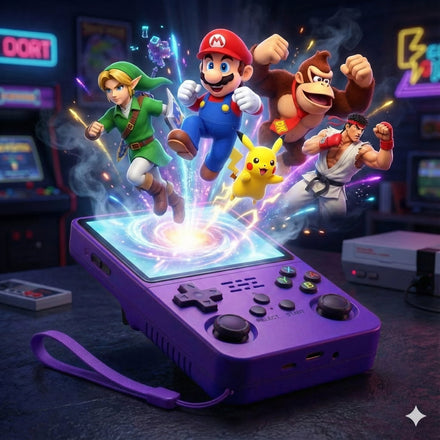
Ready to play 15,000+ retro games?
The R36S comes pre-loaded and ready to go. Ships free from our EU warehouse.
